



China has become exceptionally good at making warehouse robots cheaper. Now comes a harder challenge: making money by renting them.
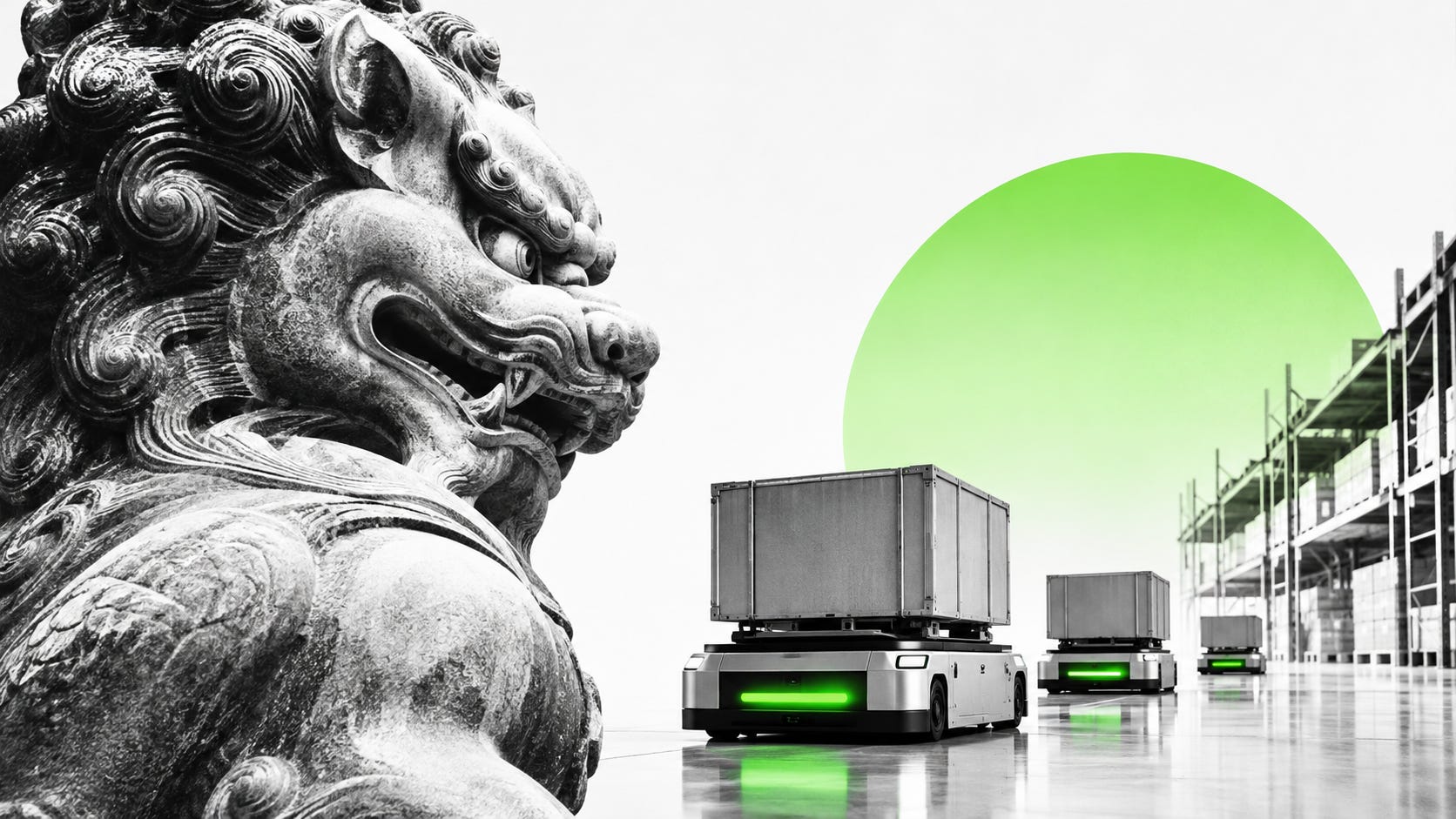
Robotics-as-a-Service (RaaS) promises to remove one of automation’s biggest obstacles: the substantial upfront investment.
Instead of purchasing robots, warehouse operators pay a subscription or, increasingly, a fee linked to work performed.
It sounds attractive. But are Chinese suppliers genuinely embracing this model, and can their manufacturing advantages make it commercially sustainable?
China’s RaaS market is already taking shape
Several leading Chinese manufacturers now offer alternatives to traditional robot purchases.
Geek+ provides rental and warehouse automation services. In the first half of 2026, it reported RMB 155.7 million in new subscription-based service orders, an increase of more than 75% year on year.
That’s encouraging, although orders aren’t the same as recognized recurring revenue - or proof of profitability.
Hai Robotics offers a managed monthly subscription covering its automated case-handling systems, maintenance and operations support. Its publicly advertised RaaS service is currently limited to Singapore.
ForwardX Robotics promotes subscription-based AMR fleets that customers can scale with demand, avoiding substantial initial capital investment.
But one of the more interesting examples comes from Syrius Technology.
The Chinese AMR manufacturer reports that ZTO Cloud Warehousing operates 30 of its robots across multiple Chinese facilities under a RaaS arrangement.
In Japan, Syrius also renewed a subscription agreement with LIXIL’s Nabari factory in 2025. The company reports a 65% reduction in walking distance and approximately 25% fewer workers required for the relevant operations.
These are vendor-reported results, but the contract renewal is meaningful: customers continuing after an initial deployment is more convincing than another successful demonstration.
Not all RaaS contracts are created equal
Here’s where the marketing becomes confusing.
Under the RaaS label, suppliers offer at least three different commercial models:
Robot rental: Pay a monthly fee for equipment, potentially with maintenance included.
Managed automation: Subscribe to a complete system, including robots, software and operational support.
Outcome-based pricing: Pay per completed pick, transported pallet or productive hour.
These models transfer very different risks.
Renting a robot removes the initial purchase cost, but doesn’t guarantee that the robot will be productive.
Paying per successful pick comes closer to buying an operational result.
US-based Tutor Intelligence is pushing this further, charging customers by the hour or by the pick while retaining responsibility for robot deployment and maintenance.
Its approach also uses remote human assistance, raising questions about how much of the work is genuinely autonomous.
For Chinese manufacturers, the competition is no longer simply about offering a cheaper robot.
It’s about determining how much operational responsibility they are prepared to assume.
China’s advantage could also become its problem
Chinese robotics manufacturers benefit from increasingly competitive hardware supply chains and extensive manufacturing capacity.
That should help them offer attractive rental rates.
But the economics of RaaS are different from traditional equipment sales.
The supplier must finance robots before receiving the full customer payments, maintain equipment throughout the contract and manage the risk of underutilized assets.
Add international spare parts, software integration, technical support and potential redeployment costs, and cheap hardware alone may not be enough.
This is particularly relevant as Chinese manufacturers compete more aggressively overseas.
A low monthly subscription means little if the supplier cannot guarantee service availability in Germany, Singapore or the United States.
Will RaaS become the preferred model?
I believe it has considerable potential, particularly for third-party logistics providers, seasonal operations and smaller warehouses that struggle to justify large automation investments.
It also offers a practical way to test unfamiliar technologies before making longer-term commitments.
The International Federation of Robotics reported that the global RaaS fleet grew 31% in 2024, while the RaaS segment within transportation and logistics grew 42%.
However, traditional equipment purchases remain important, and ownership may still be more economical for predictable, high-volume operations.
The deciding factor isn’t whether a robot is rented or purchased.
It’s the fully loaded cost of getting the work done.
That means combining the supplier’s fee with supervision, exception handling, integration, downtime, quality control and remaining labor costs.
A low monthly rate is not an ROI calculation.
The Robot Shift’s Take
RaaS could become an important competitive advantage for Chinese robotics companies—but only if they can move beyond equipment financing toward guaranteed operational performance.
The manufacturers with the best combination of affordable hardware, intelligent software, international service networks and sustainable financing will be better positioned.
For customers, I would ask three questions before signing:
What exactly are we paying for—robot availability, productive hours or successfully completed work?
Who pays when the robot fails, requires human intervention or misses productivity targets?
What is our total cost per completed operation, including our own people and systems?
My expectation is that Chinese suppliers will compete increasingly aggressively on subscription models.
But the real winners won’t necessarily offer the cheapest monthly robot.
They’ll be the ones prepared to take responsibility for the results.
And that may prove considerably harder than manufacturing another thousand AMRs.
What’s your experience with Robotics-as-a-Service? Would you rather rent robots, purchase them or pay only for the work they complete?
Share your thoughts in the comments or email robotshift@gscc.co.
The Robot Shift — China intelligence. Global perspective.